Puppy Basset Hound: A Warm, Wink-Worthy Redwork Design That Delivers
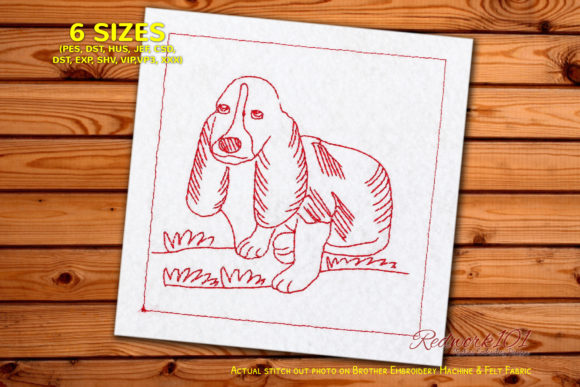
As someone who’s stitched thousands of designs for clients—from boutique baby lines to Etsy shops and custom apparel brands—I opened Puppy Basset Hound expecting charm. What I got was something more: a quiet, confident redwork design that feels handmade *before* it’s even stitched. It’s not flashy. It doesn’t rely on dense fills or glittery effects. Instead, it leans into line, expression, and that unmistakable Basset soulfulness—long ears, droopy eyes, soft muzzle—to create instant warmth.
I tested it first on a linen-cotton tea towel for a local café’s holiday gift set. The moment the needle dropped, I knew this wasn’t just “cute”—it was relatable. That gentle curve of the ear, the subtle taper of the snout, the way the redwork lines suggest volume without overloading the fabric? It reads clearly at 3.5 inches tall, holds up beautifully at 5 inches on a tote bag, and still charms at 2.75 inches on a baby onesie cuff. This is a design built for real use—not just digital previews.
Where Puppy Basset Hound Shines (and Why Your Customers Will Notice)
Puppy Basset Hound thrives in contexts where authenticity and quiet personality matter most. Think: embroidered pillow covers for a nursery, eco-bags for a pet-friendly boutique, aprons for a small-batch bakery, or sweatshirt cuffs for a dog-loving lifestyle brand. Its redwork style—clean, linear, expressive—makes it ideal for projects where you want stitching to feel intentional, not industrial.
- Custom apparel: On midweight cotton sweatshirts or structured tees, the design stitches with lovely flow—no puckering, no thread nesting. Because it relies mostly on running and satin stitch outlines (not heavy fill), it moves with the fabric instead of fighting it.
- Tote bag design: Stitched at 4.25" on natural canvas, it held its shape through two rounds of machine washing—no fraying, no distortion. The simplicity of the redwork means fewer color changes, faster hooping, and less chance of misalignment on uneven seams.
- Baby embroidery: On organic cotton swaddles and burp cloths, the low stitch density kept the fabric soft and breathable. No stiff patches, no scratchy backing—just a tender, recognizable face that parents actually point to and smile at.
- Holiday embroidery & personalized gifts: Paired with a simple monogram or seasonal phrase (“Snuggle Season,” “Basset & Co.”), it becomes a signature touch—not filler, but focal point. I used it on a set of linen napkins for a dog-themed bridal shower; guests asked where to buy the design.
Where to Pause—and Stitch With Intention
This isn’t a one-size-fits-all file. Its strengths lie in restraint, so pushing it too far can dull its appeal. Here’s where I recommend extra care:
- Small hoop sizes (under 4"): While the design scales down cleanly, avoid going smaller than 2.5". The inner eye detail and ear fold begin to blur—losing that signature Basset expressiveness.
- Textured or stretchy fabric: On terry cloth towels or lightweight knits, use a medium tear-away stabilizer *plus* a light cut-away underneath. The redwork lines need clean support—especially along those long ear curves.
- Dark fabric: The description mentions “redwork,” but doesn’t specify thread tone. Test your chosen red on black or navy fabric first. Some reds mute; others pop. A warm brick red works better than a cool cherry on charcoal.
- Curved surfaces (caps, hats): The design’s horizontal orientation and gentle width make it less ideal for front panels of curved caps unless resized and repositioned carefully. It shines instead on back straps, side gussets, or flat patch applications.
- Frequent-wash items: Though durable, avoid placing it near high-friction zones like pocket edges or waistbands on toddler pants. Center it on chest or sleeve placements for longevity.
What This Design Says About Your Brand—Before a Single Stitch
Your customers don’t just buy embroidery—they buy feeling. And Puppy Basset Hound quietly communicates warmth, approachability, and craftsmanship. When stitched on a handmade apron sold at a craft fair, it signals care—not just in the sewing, but in the selection. When used by an Etsy seller for personalized baby gifts, it elevates perceived value without demanding premium pricing. It’s professional without being sterile, nostalgic without being dated.
I’ve seen too many “dog” embroidery files fall flat—overly cartoonish, poorly proportioned, or so dense they look like static on fabric. This one avoids all that. Its balanced negative space, thoughtful line weight, and clear silhouette mean it photographs well in mockups, prints cleanly in black-and-white product listings, and reads instantly—even in thumbnail size on a mobile screen.
Practical Designer Notes Before You Stitch
Before adding Puppy Basset Hound to your next project—or listing it as part of your digital embroidery file shop—do these five things:
- Test on scrap fabric that matches your final substrate—same weight, same weave, same stretch.
- Check thread color contrast against both light and dark backgrounds. Redwork only works if the thread lifts off the fabric.
- Review stitch density visually in your software. Look for any tight clusters (especially around the eyes or nose) that might require reduced density or alternate stitch types.
- Confirm hoop size compatibility—not just maximum, but whether the design fits comfortably within your most-used hoop with room for stabilization and movement.
- Verify licensing terms before selling finished products or bundling it into commercial design assets. If unclear, contact the source directly—don’t assume.
Also: try stitching it in black thread on ivory linen. Then try it in ecru on deep burgundy cotton. See how the mood shifts. That flexibility—the ability to adapt emotionally while staying true to its core—is what makes Puppy Basset Hound more than a dog embroidery file. It’s a quiet, reliable design asset for makers who value clarity, character, and real-world performance.