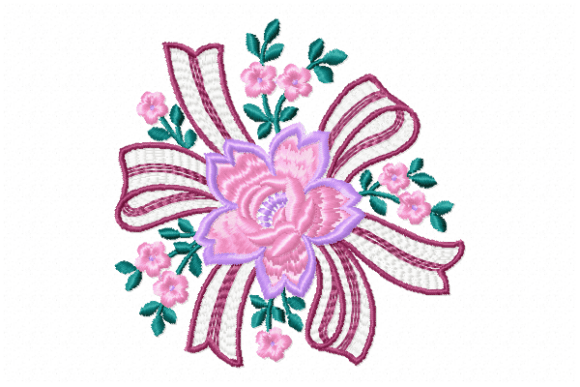
Floral Ribbon: A Timeless Embroidery Design for Meaningful Gifts
First Impressions: Sweet, Elegant, and Quietly Romantic
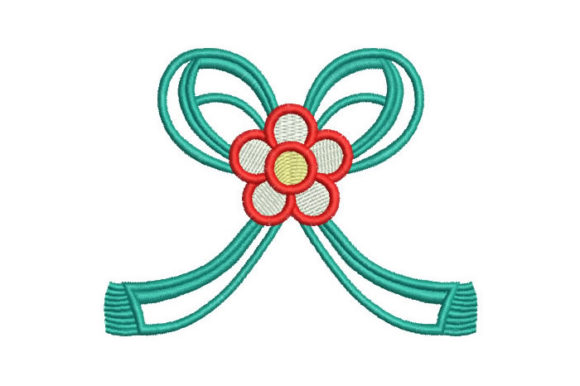
As an embroidery designer who’s tested hundreds of floral motifs for gift-focused businesses, I opened Floral Ribbon expecting charm—and was immediately struck by its gentle rhythm. It’s not bold or botanical; it’s soft, flowing, and intentionally unhurried—like a ribbon gently winding through a garden at dawn. The design leans into romantic elegance without feeling fussy, making it ideal for personalized gifts where emotional resonance matters more than flash. It feels handmade in spirit, even when stitched digitally: delicate loops, subtle petal overlaps, and a natural asymmetry that avoids machine-perfect sterility. For customers seeking warmth over wow, Floral Ribbon delivers sincerity—not spectacle.
Where This Design Truly Shines
Floral Ribbon is remarkably versatile across the most common personalized gift categories—and that’s rare. As a machine embroidery design rooted in the Floral Garden aesthetic, it adapts beautifully to both intimate and functional items:
- Baby embroidery: Perfect for crib sheets, muslin blankets, and onesie accents—its gentle curves avoid sharp edges, and its scale reads clearly even on small garments.
- Wedding gift: Stitched onto linen napkins, pillow covers, or monogrammed towel sets, it adds heirloom softness without competing with formal monograms.
- Nursery decor: On cotton canvas wall hangings or quilt labels, Floral Ribbon feels intentional, not cutesy—ideal for modern, gender-neutral spaces.
- Embroidered towel & kitchen textiles: Its open structure prevents stiffness on terry cloth, and the ribbon motif reads well against vertical folds and hems.
- Tote bags, aprons & pillow covers: Because it flows rather than fills space, it complements text (like names or dates) without visual clutter—key for Etsy sellers curating cohesive listings.
For small shop owners and craft fair vendors, this design works especially well as a “signature accent”—think: a single Floral Ribbon trailing beside a custom name on a baby blanket or wrapping around the corner of a linen tea towel. It elevates the handmade product without demanding premium pricing.
Use With Care: Smart Placement Matters
While Floral Ribbon is forgiving, its delicacy means thoughtful application is essential—especially when stitching for real customers. Avoid placing it:
- On heavily textured fabric (e.g., thick waffle-weave towels) without testing stabilizer layers first—fine loops may sink or distort.
- Across curved surfaces like rounded tote handles or baby hat brims—stitch density can pull threads unevenly.
- In small lettering zones—this is a motif, not a font. Pair it *with* text, never *as* text.
- Directly on dark fabric without confirming thread color contrast in your embroidery file preview—some pale pinks or creams may disappear.
- On stretchy baby clothes (like knit bodysuits) without cutaway stabilizer and reduced stitch density—delicate petals need support to hold shape after washing.
If you’re planning blanket embroidery or nursery items meant for frequent laundering, run a test on scrap fabric *first*, then wash and dry it. See how the ribbon holds its flow. That step alone saves returns—and builds trust.
Why Customers Connect (and Why You Should, Too)
Floral Ribbon doesn’t just look nice—it signals care. In a crowded marketplace of digital embroidery files, this design feels curated, not generic. That perception lifts the entire finished product: a towel with Floral Ribbon reads as a considered wedding gift, not a last-minute Etsy add-on. For Etsy sellers and handmade brands, that nuance translates directly to higher perceived value, better product photography (the ribbon catches light softly), and stronger buyer engagement—especially among customers searching for “meaningful baby embroidery” or “romantic wedding keepsake.”
It also quietly reassures buyers about quality. Because the motif avoids overcrowded fill stitches, it suggests attention to fabric drape and wearability—not just visual impact. That builds customer trust before the first stitch is even made.
Practical Notes Every Embroiderer Should Check
Before stitching Floral Ribbon for a client or listing, take these five minutes—seriously:
- Test on scrap fabric matching your final product (terry, linen, cotton poplin, etc.)—not just standard stabilizer swatches.
- Confirm hoop size compatibility with your machine and intended placement (e.g., a narrow ribbon works in a 4x4 hoop; longer versions may require 5x7).
- Review stitch density in your embroidery software—look for areas where fine loops meet stems; overly dense sections can cause puckering on lightweight fabrics.
- Match stabilizer to use case: Tear-away for stable linens, cutaway for knits or towels, and lightweight fusible for delicate baby items.
- Compare light/dark fabric mockups using your thread palette—some designs rely on tonal variation, but Floral Ribbon needs clear contrast to sing.
And one non-negotiable: verify commercial licensing before selling finished products. Since this is a digital embroidery file intended for resale use, confirm whether your purchase includes rights for small business use—or if you’ll need an upgraded license for wholesale or Etsy production.
A Design That Grows With Your Business
Floral Ribbon isn’t just another floral embroidery—it’s a quiet workhorse. Whether you're designing baby embroidery for a boutique, building a wedding gift collection, or launching a line of embroidered kitchen textiles, this motif bridges seasons, styles, and stories. It fits naturally within the Floral Garden category while standing apart from trend-driven florals. And because it’s designed for versatility—not just decoration—it supports your growth as a maker, seller, and storyteller.
For anyone stitching with intention—and gifting with heart—Floral Ribbon is more than a design. It’s a promise of softness, continuity, and care—thread by careful thread.