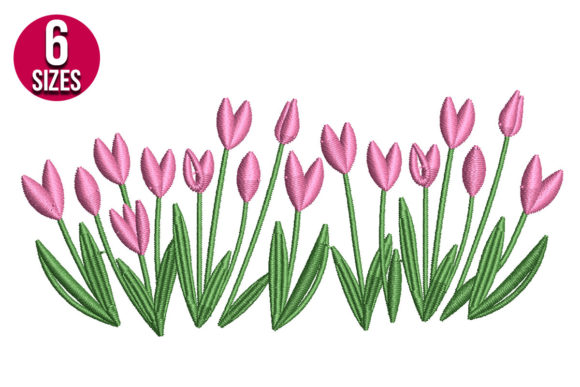
Tulip Flowers Embroidery Design Review
Why Tulip Flowers Fits Seamlessly Into a Handmade Product Line
As an embroidery seller who’s launched over 200 Etsy listings—and seen which designs convert and which gather dust—I approached Tulip Flowers with a practical eye. Not just “Is it pretty?” but “Will it sell on a tote bag in March? Will it hold up on a baby blanket? Does it read clearly at thumbnail size?” The answer, across multiple test scenarios, is yes—especially for sellers building a cohesive, seasonal, and giftable collection.
A Fresh, Feminine, Timelessly Springy Vibe
Tulip Flowers lands squarely in the elegant-yet-approachable zone: not overly ornate, not too minimal. It reads as feminine without being saccharine, classic without feeling dated, and fresh without leaning into trend-chasing. That balance makes it ideal for both evergreen listings (think embroidered kitchen towels or pillow covers) and limited seasonal drops (spring baby showers, Easter gifting, Mother’s Day collections). Unlike bolder floral motifs, Tulip Flowers doesn’t compete with fabric prints—it enhances them. And unlike cartoonish or abstract florals, it retains botanical charm that resonates with buyers seeking handmade authenticity.
Where Tulip Flowers Shines in Real Product Applications
- Tote bag design: Stitches cleanly on medium-weight canvas; tulips read beautifully centered on the front panel or subtly along the side seam.
- Sweatshirt embroidery: Works well on crewnecks and raglans—especially when paired with soft pastel thread colors against heather grey or oatmeal fabric.
- Baby embroidery: Gentle scale and organic shape make it perfect for onesies, burp cloths, and swaddle blankets—no sharp angles or tiny details to snag or fray.
- Kitchen towel embroidery: A single tulip near the corner or a small cluster along the hem adds quiet sophistication without overwhelming utility.
- Embroidered patch: Clean outlines and moderate fill areas mean it transfers well to iron-on or sew-on patches—ideal for aprons, denim jackets, or craft fair merch.
- Personalized gift: Pair with monogrammed initials or a short sentiment (“Spring With You,” “Bloom Where You’re Planted”) for thoughtful, non-generic gifting.
Supporting Your Craft Business Beyond the Stitch
Tulip Flowers isn’t just about what you stitch—it’s about how easily you can market it. Its visual clarity makes it highly photogenic: it pops in natural light, holds detail in flat-lay shots, and translates well into printable mockups for Etsy banners or Instagram carousels. For Etsy sellers, that means faster product photography turnarounds and stronger click-through rates. For craft fair vendors, it lends itself to cohesive booth styling—imagine matching tulip-embroidered tea towels, napkins, and sachets displayed together. And for boutique merchandise or small batch apparel, its versatility supports cross-category bundling (e.g., “Spring Garden Set”: pillow cover + kitchen towel + embroidered cap).
Buyer-Focused Value You Can’t Overlook
Shoppers don’t buy embroidery files—they buy feelings, stories, and perceived quality. Tulip Flowers delivers on all three. Its botanical accuracy signals care and craftsmanship. Its gentle rhythm feels calming and intentional—not rushed or generic. That translates directly into perceived value: customers are more likely to choose your $48 embroidered pillow cover over a mass-produced alternative because the design feels *chosen*, not templated. It also elevates gifting appeal: a tulip-embroidered baby blanket reads as heirloom-quality; a sweatshirt with a single stem says “thoughtful,” not “trendy.”
Practical Seller Notes Before You List
Before adding Tulip Flowers to your shop, treat it like any new supplier—not just another download. Here’s what I do every time:
- Test the machine embroidery design first. Run a sample on scrap fabric using your go-to stabilizer and thread brand. Note how the petals lay—do they cup or flatten? Is the stem crisp?
- Photograph it on real fabric. Don’t rely on digital mockups alone. Shoot it on your actual tote bag canvas, your preferred sweatshirt knit, and your linen pillow cover fabric. Lighting matters—natural window light reveals texture best.
- Compare thread color options. Tulips aren’t just red—try sage green stems with blush petals, or deep plum blooms on ivory linen. Swatch 3–4 combos and see which feels most ownable for your brand.
- Check readability at listing-thumbnail size. Zoom out to 25% in your image editor. Can you still tell it’s a tulip? If not, consider simplifying placement (centered, not tucked in a corner) or adjusting scale.
- Review stitch density and hoop size. High density = beautiful detail but longer run time and more thread use. Confirm the hoop size required—some tulip motifs need 5x7”, others fit in 4x4”. This affects your production flow and equipment setup.
- Verify Creative Fabrica licensing. While Tulip Flowers is listed under Floral Garden and Embroidery, confirm whether the license permits commercial embroidery of finished products. Never assume—always check the product page before selling physical items.
Final Thought: A Quietly Strategic Addition
Tulip Flowers won’t shout—but it will linger. In a marketplace flooded with loud, fast, algorithm-chasing designs, its quiet confidence is its strength. It supports slow, intentional product development: fewer SKUs, higher perceived value, stronger repeat customers. Whether you’re launching your first Etsy shop or refining a seven-year-old craft business, this Creative Fabrica embroidery file earns its place—not because it’s flashy, but because it works, sells, and stays true to what handmade product buyers truly respond to: authenticity, care, and timeless charm.