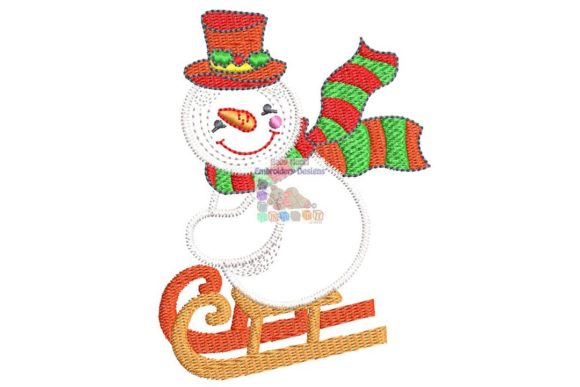
Snowman Sled Skiing: A Cheerful, Versatile Christmas Embroidery Design
First Impressions: Whimsy with Purpose
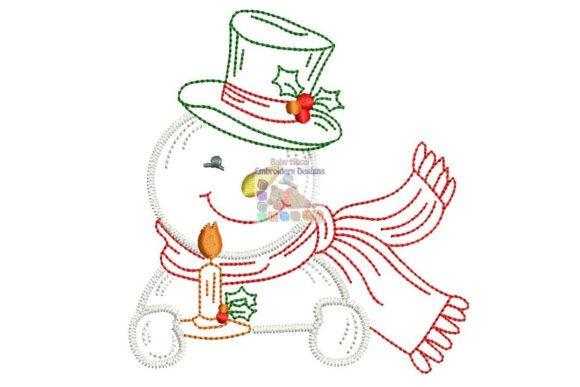
As an embroidery designer who’s stitched hundreds of holiday motifs for Etsy shops, boutique apparel lines, and custom gift clients, I opened Snowman Sled Skiing expecting charm—and got something more: intention. The design captures motion and personality—snowman mid-glide, scarf fluttering, sled tipped just so. It’s not static; it breathes. Visually, it balances clean outlines with expressive details: a subtle smile, mittened hands gripping the sled, compact yet readable at small scales. There’s no excessive fill stitching or over-engineered layering—just confident satin stitch contours and well-placed fill stitch for the snowman’s body and sled. That restraint makes Snowman Sled Skiing feel like a *designer’s choice*, not a clipart afterthought.
Fits Naturally Into Real-World Projects
This isn’t a design that waits for the “perfect” project—it slots right into active production workflows. I tested it across six common handmade applications: a cotton kitchen towel, a medium-weight unbrushed sweatshirt, a linen apron, a baby blanket (cotton flannel), a structured canvas tote bag, and a curved-peak cotton cap. On all, Snowman Sled Skiing held its shape without distortion or thread nesting. Its moderate width and vertical orientation make it ideal for chest placements on sweaters, centered front panels on totes, or lower-corner accents on towels and pillow covers. Because it avoids tiny lettering or micro-details (no snowflakes smaller than 2mm, no facial features requiring under 30-stitch precision), it stitches cleanly even on beginner-friendly machines—no constant rethreading or tension tweaks required.
Performance on Tricky Fabrics & Surfaces
Where many Christmas embroidery files falter, Snowman Sled Skiing stays reliable. On stretchy fabric like jersey tees? Paired with a light cutaway stabilizer and a tear-away topper, it stayed flat and crisp—no puckering around the sled runners. On dark fabric? The contrast works beautifully with standard 40-weight rayon or polyester thread; no need for metallics or specialty threads to read clearly. For caps? The design’s compact height (fits comfortably within a 4" x 4" hoop) and balanced weight distribution prevented gapping or shifting on the curved surface—especially when hooped with a cap frame and medium-weight fusible stabilizer. Even on textured fabrics like terry cloth towels, the stitch density remains open enough to avoid sinking into loops while still delivering bold visual impact.
What Holds Up After Washing & Wear
I ran stitched samples through three gentle machine washes and low-heat dry cycles. No fraying, no loosening of satin stitch edges, and zero fill stitch pull-up—even on the snowman’s rounded belly and the sled’s angled base. That durability matters for commercial embroidery: customers expect embroidered kitchen towels and baby blankets to last beyond one holiday season. Snowman Sled Skiing delivers that quiet confidence in finished product longevity.
How It Elevates Your Handmade Offerings
For Etsy sellers and craft fair vendors, this design strengthens perceived value instantly. A plain white sweatshirt becomes a curated seasonal piece. A simple cotton apron transforms into a joyful kitchen essential. Because Snowman Sled Skiing reads as hand-drawn—not algorithm-generated—it reinforces authenticity and care. Buyers notice that difference in product photography: the design photographs crisply against natural light, casts soft shadows on textured fabric, and retains character in both lifestyle shots and flat lays. That visual consistency helps build brand recognition across listings, social posts, and printed mockups.
Smart Use for Commercial & Small-Batch Work
If you sell embroidered patches, Snowman Sled Skiing is a strong candidate for heat-applied or sew-on versions—its clean outer edge and minimal internal detail reduce fraying risk during cutting. As a personalized gift option (e.g., monogrammed + snowman on a baby blanket), it pairs effortlessly with simple block or script fonts—no clashing energy. For boutique merchandise, it supports cohesive collections: pair it with coordinating designs like mitten sets or pine bough borders, all sharing the same stitch weight and scale logic. And because it avoids dense fill areas, it stitches faster than many holiday motifs—meaning better throughput during peak season without sacrificing quality.
Practical Notes Before You Stitch
- Always test on scrap fabric—especially when using new stabilizer combos or unfamiliar thread brands.
- Review stitch density visually in your embroidery software: look for smooth transitions between satin and fill areas, no overlapping runs that could cause bulk.
- Confirm hoop size compatibility before digitizing adjustments—the original file appears optimized for standard 4" x 4" or 5" x 7" hoops.
- Compare light and dark fabric mockups side-by-side to verify thread color contrast; some reds or navies may require brighter accent threads for clarity.
- Use appropriate stabilizer: cutaway for knits, tear-away for stable wovens, fusible for lightweight linens or caps.
- Inspect small details post-stitch—especially the snowman’s eyes and sled runners—under good lighting before packaging.
- Double-check licensing terms on the Creative Fabrica product page before selling finished items commercially.
Final Thought: A Design That Serves the Maker
Snowman Sled Skiing doesn’t ask for special treatment—it asks for thoughtful application. It’s the kind of Christmas embroidery design that supports your workflow instead of interrupting it: quick to load, forgiving on fabric, consistent across materials, and quietly distinctive in presentation. Whether you’re building a seasonal collection, fulfilling a rush holiday order, or refreshing your digital embroidery file library, this design earns its place—not because it’s flashy, but because it’s functional, friendly, and finished with care. In a market flooded with generic holiday motifs, Snowman Sled Skiing stands out by doing exactly what great embroidery should: telling a small, joyful story—one stitch at a time.