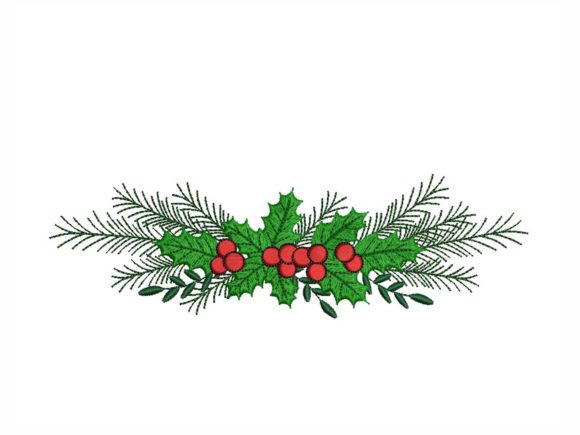
Christmas Holly Embroidery Design
First Impression: Fresh, Festive, and Booth-Ready
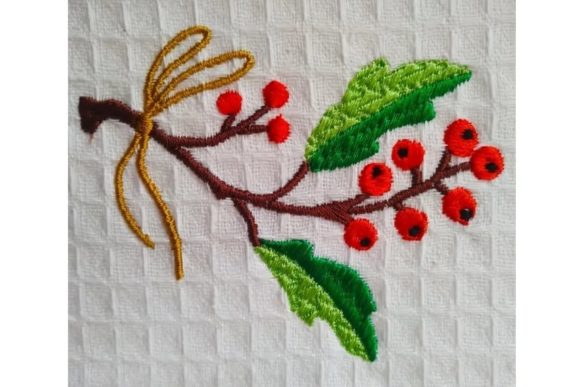
As an embroidery designer who’s prepped over 200 craft fair booths—and sold thousands of handmade products—I opened Christmas Holly with one question: “Will this stop someone mid-aisle?” The answer is yes. It reads as fresh and festive, not cliché or cluttered. There’s no cartoonish grin, no glitter overload—just clean botanical structure, balanced leaf-to-berry proportion, and a quiet confidence that says “handmade quality,” not “last-minute download.” It leans elegant-festive rather than rustic or modern-minimal, making it instantly compatible with farmhouse kitchens, boutique gift shops, and upscale holiday markets.
Where Christmas Holly Shines on Craft Fair Products
This design isn’t just versatile—it’s strategic. On a crowded table display, Christmas Holly stands out where subtlety wins: on tea towel embroidery, embroidered patch sets, linen pillow covers, and small fabric pouches. It’s especially effective at the 3–4 inch size—large enough to read clearly from three feet away, small enough to fit neatly on a market bag strap or apron pocket.
- Tote bag design: Works best centered low on natural canvas or oatmeal linen—lets the holly breathe without competing with handles or seams.
- Apron embroidery: Ideal above the pocket or subtly along the waistband. Its organic shape softens structured cotton twill beautifully.
- Tea towel embroidery: A top performer. Holly reads crisply against terry loops when stitched with light cutaway stabilizer—no sinking or distortion.
- Embroidered patch: Highly adaptable. Trimmed and heat-sealed, it adds instant holiday charm to denim jackets or reusable shopping bags.
- Pillow cover & bedsheets: Scales elegantly. As a single motif in the corner or repeated in a subtle border, it elevates perceived value without overwhelming.
- Caps & curved surfaces: Use caution—tight curves distort leaf tips. Best reserved for flat-front panels or low-profile trucker caps with ample stabilizer support.
What Makes Christmas Holly Sell—Beyond the Stitch
For Etsy sellers and small shop owners, Christmas Holly delivers three silent sales advantages: recognizability, repeatability, and photogenic clarity. Customers instantly identify it as “holly”—no decoding needed. That means faster decision-making at craft fairs and higher click-throughs on digital listings. As a machine embroidery design, it’s built for batch production: consistent spacing, moderate stitch density, and no micro-details that snag threads or blur on textured towels.
It photographs exceptionally well—even on dark fabric—because the contrast between deep green leaves and vibrant red berries translates cleanly in natural light. That’s critical for printable mockups and Etsy listings where first impressions happen in under two seconds. And because it avoids tiny lettering or fragile stems, it holds up across fabric types: from smooth quilting cotton to nubby burlap and medium-weight knits.
Careful-Use Notes Every Embroiderer Should Know
Even strong designs have limits—and skipping these checks can cost time, thread, and booth credibility.
- Dense stitch areas: Berry clusters may require slightly slower speed or extra stabilizer on thick fabrics like denim or fleece-lined pouches.
- Textured towels: Always test on your exact towel weave. Terry loops can swallow fine veins—opt for a simplified leaf outline if needed.
- Dark fabric: Red thread must be high-contrast (e.g., #498 or #500) to avoid muddiness. Avoid metallic reds—they photograph poorly and fray easily.
- Small sizes: Below 2.5 inches, berry definition softens. Reserve tiny versions strictly for patches or cuff accents—not standalone focal points.
- Fabric stretch: Not ideal for highly elastic knits (like jersey jumpers) without proper tear-away + cutaway combo stabilizer.
How Christmas Holly Strengthens Your Handmade Brand
In a sea of generic snowflakes and Santa silhouettes, Christmas Holly quietly signals intentionality. It tells customers you curate—not just compile—your design assets. When used consistently across tote bags, tea towels, and pillow covers, it builds visual cohesion across your booth. That consistency makes your small shop product feel like part of a collection, not a grab bag of seasonal downloads.
It also supports premium pricing. Because the motif feels both timeless and freshly interpreted, buyers accept a $38 embroidered pillow cover or $24 linen apron more readily than they would for a pixelated clipart-style holly. That perceived handmade quality? It starts with smart design selection—and Christmas Holly delivers that foundation.
Essential Embroidery Designer Notes Before You Stitch
Before cutting your first fabric piece or uploading to your embroidery machine:
- Test the embroidery file on scrap fabric matching your final product’s weight and texture.
- Check thread contrast—especially red against greens, navies, or charcoals.
- Review spacing between leaves and berries: tight gaps risk skipped stitches on dense fabric.
- Confirm hoop size compatibility—don’t assume it fits your standard 4×4 unless verified.
- Inspect stitch density in berry centers—overly dense fills cause puckering on lightweight linens.
- Use appropriate stabilizer: light cutaway for towels, tear-away for quilting cotton, fusible + cutaway for knits.
- Create at least one real mockup—not just a digital preview—to assess drape, scale, and tactile impact.
- Compare fabric colors side-by-side: natural linen vs. oatmeal vs. unbleached cotton all change how green and red read.
- Verify commercial licensing terms before selling finished products—this is non-negotiable for Etsy sellers and wholesale partners.
Bottom line? Christmas Holly isn’t just another holiday embroidery file. It’s a thoughtful, market-tested asset—one that works as hard for your craft fair booth as it does for your Etsy shop, your wholesale line, or your next batch of small shop products. Stitch it right, showcase it intentionally, and let the freshness speak for itself.