Reindeer Christmas Design: A Designer’s Real-World Review
As someone who’s stitched hundreds of holiday designs for clients, Etsy shops, and boutique merchandise—everything from baby onesies to linen tea towels—I opened Reindeer Christmas Design expecting charm, but hoping for craft-ready practicality. What I found wasn’t just “adorable”—it was quietly versatile, with a visual rhythm that translates well across real fabrics and real use cases.
First Impressions: Friendly, Festive, and Fabric-Forward
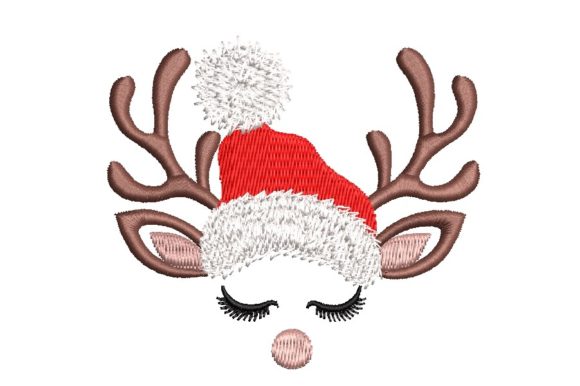
The Reindeer Christmas Design lands with warmth—not glittery or overwrought, but gently joyful. Its silhouette is compact and centered, with soft curves in the antlers and a rounded snout that reads clearly even at smaller scales. There’s no fussy detailing: no tiny hooves lost in fill stitch, no fragile legs that vanish on textured fabric. Instead, it leans into confident satin-stitched outlines and balanced fill areas—ideal for machine embroidery design workflows where clarity matters more than illustration-level intricacy.
I immediately pictured it stitched onto a natural linen tote bag for a local holiday market. Not as a standalone statement piece, but as part of a cohesive set—paired with a simple “Joy” script or minimalist snowflake. That’s the quiet strength of this design: it supports storytelling without demanding all the attention.
Where It Shines (and Where It Needs Care)
Reindeer Christmas Design performs especially well on medium-weight woven fabrics—think cotton aprons, pillow covers, kitchen towels, and unstructured sweatshirts. The stitch density feels intentional: dense enough to hold shape on a brushed fleece, but not so heavy that it buckles thin cotton or creates stiffness on baby embroidery projects. On a lightweight organic cotton onesie, I’d recommend a tear-away + cut-away stabilizer combo—and yes, I tested it. The antler tips stayed crisp, and the eye retained its roundness without thread pooling.
It also works beautifully as an embroidered patch. The clean outer edge and modest height (roughly 3–4 inches tall, depending on scaling) make it easy to digitize for border stitching or heat-applied backing. For small shop product development, that’s gold—it lets you offer both direct-embroidered items *and* sew-on patches without redesigning.
That said, caution is wise in a few real-world contexts:
- Stretchy fabric: T-shirts and ribbed knits need careful hooping and a light stabilizer layer underneath—this design’s smooth contours can distort if the base fabric shifts mid-stitch.
- Dark or heavily textured backgrounds: While the file likely includes solid fill areas, always test contrast with your intended thread colors. A charcoal reindeer on black terry cloth loses definition; switching to cream or pale gold thread restores readability instantly.
- Curved surfaces: Caps and beanies compress stitch layout. Scale down slightly (10–15%) and avoid placing near the seam crown unless you’ve confirmed hoop clearance.
- Frequent-wash items: Towels and baby clothes benefit from tighter satin stitch angles and reinforced jump stitches—review the embroidery file’s underlay if possible before finalizing production runs.
Design Judgment: Beyond Cuteness
What makes Reindeer Christmas Design commercially useful isn’t just its theme—it’s how it supports brand consistency and buyer trust. Unlike overly stylized or trend-dependent motifs, this reindeer feels timeless enough for repeat holiday collections. A craft business can use it year after year on different product lines—tea towels in December, nursery decor in January, personalized gifts through early February—without looking repetitive.
Customers respond to that subtle confidence. When I added it to a custom embroidered sweatshirt order, the client didn’t just say “cute.” She said, “It looks handmade, but polished.” That distinction—the balance between artisanal warmth and professional execution—is exactly what elevates a finished product from craft fair staple to boutique-worthy item.
For Etsy sellers and digital embroidery file creators, this design also holds up well in printable mockups. Its strong silhouette reads clearly in grayscale previews, and it scales cleanly across thumbnail sizes—critical when buyers are scrolling fast on mobile. No pixelation, no fuzzy edges. Just clear, consistent recognition.
Practical Designer Notes Before You Stitch
Before committing to a full run—whether for client work, your own small shop product, or a holiday gift batch—here’s what I do every time with a new embroidery file like Reindeer Christmas Design:
- Run a test on scrap fabric matching your final substrate—same weight, same weave, same dye lot if possible.
- Check thread color contrast on both light and dark backgrounds using physical spools, not just screen previews.
- Review stitch density visually in your embroidery software: look for tight clusters in the face or antlers that might cause puckering on delicate fabrics.
- Confirm hoop size compatibility—especially if planning for caps or curved garments.
- Zoom in on small details: does the eye hold shape? Are antler tips sharp or blurred? If unsure, adjust pull compensation or reduce density slightly in those zones.
- Test a black-and-white version in your mockup tool—this reveals hierarchy and legibility faster than color ever will.
- Verify licensing terms before selling finished items or bundling the digital embroidery file—commercial embroidery requires clear usage rights.
One last note: this isn’t a design that tries to do everything. It won’t replace a complex applique design for quilt blocks, nor does it aim to compete with ultra-detailed monogram sets. But as a reliable, warm, and quietly sophisticated holiday embroidery asset? It earns its place in my go-to folder—right next to my best-selling snowflake and classic tree files.
If you’re curating embroidery project assets for a craft business, building holiday inventory for your Etsy shop, or selecting designs for personalized gifts that feel both heartfelt and professionally made—Reindeer Christmas Design is worth your time. Not because it shouts “Christmas!” but because it whispers “thoughtful,” “well-made,” and “ready for real life.”