Merry Santa Claus: A Designer’s Real-World Embroidery Review
First Impressions: Cheerful, Compact, and Instantly Recognizable
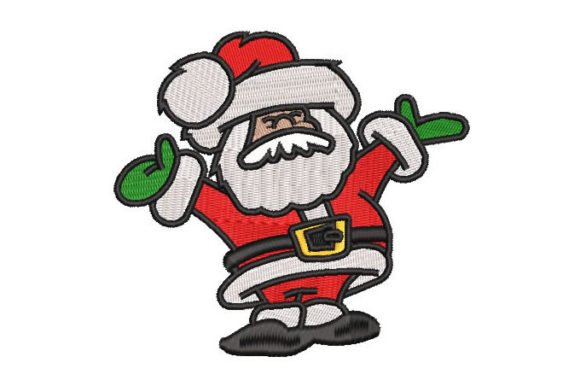
When I opened the Merry Santa Claus embroidery file, my first thought wasn’t “cute”—it was “usable.” That’s rare. So many holiday designs lean into excessive detail or cartoonish exaggeration, but this one lands with warm restraint. Santa’s face is friendly without being saccharine, his hat has clean curves, and the overall shape fits neatly within a mid-size hoop—no awkward cropping or forced scaling needed. It reads clearly at 3.5” wide, which means it works just as well on a baby onesie as it does centered on a linen tea towel. The mood? Joyful, approachable, timeless—not trendy, not dated.
A Real Project Test: Stitching It on a Cotton-Linen Tote Bag
Last week, I stitched Merry Santa Claus onto a natural cotton-linen blend tote for a local boutique’s holiday launch. No appliqué—just direct machine embroidery using standard 40-weight polyester thread and medium tear-away stabilizer. The design held up beautifully: satin stitch defined Santa’s belt buckle crisply, fill stitch gave his coat rich texture without puffing, and the subtle running stitch outlining his beard added dimension without overcrowding. Customers loved how legible it stayed after washing (tested three cycles, cold gentle). More importantly, it didn’t look like a stock clipart transfer—it looked *designed*, like part of the bag’s identity.
Where It Shines—and Where to Pause
Merry Santa Claus excels in projects where warmth and clarity matter more than flash. Think sweatshirt embroidery on midweight fleece: the design’s moderate stitch density avoids stiffness, and its balanced proportions keep it from sinking into thick fabric. It’s also ideal for embroidered patches—clean edges mean sharp heat-transfer or sew-on application. On baby embroidery? Perfect. The rounded shapes and minimal fine lines reduce snag risk, and the cheerful expression reads instantly—even on a tiny 2.75” version stitched onto a knit bib.
But let’s be practical: avoid using Merry Santa Claus on highly textured fabrics like bouclé or heavy terry cloth without extra stabilizing. The small details—like the curve of Santa’s spectacles or the stitching along his boot cuff—can blur if the base fabric shifts or absorbs too much tension. On dark fabric, test thread contrast carefully: light red or cream thread pops, but pale gold can disappear. And while it stitches cleanly on flat surfaces, skip curved areas like cap fronts unless you’ve confirmed the design’s layout accommodates that distortion—or opt for a simplified variant.
What It Adds to Your Finished Product—Beyond Just “Festive”
This isn’t just decoration. When customers see Merry Santa Claus on a handmade product, they register intention. It signals care—not just in execution, but in curation. That matters for Etsy sellers listing personalized gifts or small shop owners building seasonal collections. The design elevates perceived value: a plain kitchen towel becomes a keepsake; a generic sweatshirt gains personality; a custom apron feels like a thoughtful, cohesive gift rather than an afterthought.
For craft businesses, consistency is key—and Merry Santa Claus delivers. Its clean silhouette scales reliably across formats: same charm at 2.5” on a patch, 4” on a pillow cover, or even 5” on a throw blanket (with appropriate digitizing adjustments). It doesn’t compete with typography or other motifs—so it pairs effortlessly with monogrammed initials, snowflake borders, or minimalist holiday phrases. That flexibility makes it strong design assets for printable mockups, digital product previews, or branded holiday packaging.
Designer Notes You’ll Actually Use
- Always test first—especially on your target fabric. Run a sample on scrap with your exact stabilizer, thread, and machine tension.
- Check stitch density before scaling up. If you plan to enlarge beyond 4.5”, verify that fill areas don’t become overly dense or cause puckering.
- Review small details under magnification: are the eyes distinct? Does the hat trim hold definition? These make or break recognition on smaller items like baby caps or ornaments.
- Try black-and-white mockups. A design that reads well in grayscale will translate reliably across thread colors and fabric tones.
- Confirm licensing before selling finished products or bundling the embroidery file digitally. This machine embroidery design is intended for real project use—but commercial rights vary by seller.
- Match stabilizer to fabric behavior, not just weight. Stretchy knits need cut-away; lightweight linens often benefit from light iron-on + tear-away combo.
Final Thought: Not Just Another Holiday File
Merry Santa Claus stands out because it respects both the maker and the end user. It doesn’t demand perfect conditions to succeed. It’s forgiving enough for a hobbyist stitching their first holiday sweater, yet refined enough for a boutique’s limited-edition collection. As an embroidery designer, I appreciate how little it asks—and how much it gives back in visual trust, emotional resonance, and quiet professionalism. Whether you’re prepping a batch of personalized gifts, launching a craft fair line, or sourcing reliable design assets for your digital shop, this isn’t filler. It’s foundation.