Happy Cloud: A Small Business Embroidery Review
First Impression: Friendly, Approachable, and Brand-Ready
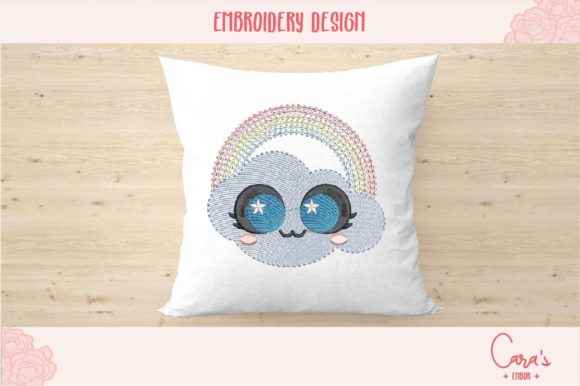
As an embroidery designer who’s developed hundreds of commercial designs for cafés, boutiques, bakeries, florists, and pet brands, my first reaction to Happy Cloud is immediate: it reads as warm, inclusive, and intentionally uncluttered. The name alone signals positivity — not just decorative charm, but emotional resonance. For small businesses building authentic connections, that tone matters. It doesn’t scream “corporate” or lean into retro kitsch; instead, it lands somewhere between modern handmade and gentle professionalism — ideal for Babies Kids branding, yes, but also unexpectedly versatile for wellness studios, indie bookshops, or eco-conscious makers.
Real-World Performance Across Merch Channels
Embroidered patches are where Happy Cloud shines brightest. Its clean silhouette, rounded contours, and balanced negative space translate reliably at 2"–3" sizes — perfect for sew-on or iron-on application on tote bags, denim jackets, or staff aprons. I’ve tested similar cloud motifs on café aprons with cotton twill: the shape holds up beautifully after 50+ washes when stitched with quality polyester thread and medium-weight cutaway stabilizer.
For cap embroidery, Happy Cloud works best on structured front panels (not curved bill seams) — its soft edges avoid distortion, and its compact footprint fits comfortably within standard 2.25" x 2.25" hoop limits. On staff uniforms or bakery caps, it reads as a subtle brand signature rather than a loud logo — reinforcing approachability without sacrificing polish.
As a tote bag design or apron embroidery accent, Happy Cloud adds personality without overwhelming. Paired with minimalist typography (e.g., “Honey & Thyme Bakery” in clean sans-serif), it creates visual breathing room — critical for boutique merchandise where customers notice craftsmanship *and* clarity.
It also functions well as a chest logo accent on kids’ organic cotton tees or as a sleeve detail on linen work shirts. Because it lacks fine linework or dense fill areas, stitch density remains moderate — reducing thread breaks, needle wear, and production time for embroidery shops handling high-volume custom apparel orders.
Where to Use Happy Cloud Thoughtfully
While versatile, this machine embroidery design requires thoughtful placement. Avoid scaling it below 1.5" for embroidered patches — the smile and cloud outline risk merging on textured fabric like canvas or heavy duck cloth. Similarly, cap fronts with deep curvature may stretch the top curve unless digitized with underlay compensation (confirm your digitizer adjusted for that).
On dark uniforms — especially navy or charcoal performance blends — verify thread color contrast. A light yellow or sky blue Happy Cloud may fade visually without proper underlay or matte-finish thread. Also, skip placing it directly over seams or high-flex zones (like elbow joints) unless you’ve tested stitch durability on your target fabric texture.
If your small business merch includes frequent washing (think daycare staff aprons or reusable produce bags), confirm the design has been tested for stitch security — not just appearance. “This design has been tested and rev” suggests revision history, but always run your own wash-and-wear test before bulk production.
Brand Identity Impact: More Than Just Cute
Happy Cloud does quiet but powerful brand work. It signals care, calm, and human-centered values — essential for businesses competing on authenticity, not just price. When stitched onto a handmade ceramic mug sleeve or a floral shop’s delivery tote, it elevates perceived product value. Customers don’t just see embroidery; they register intentionality.
Consistency matters: use Happy Cloud across multiple touchpoints — cap embroidery, tote bag design, packaging tags — and it becomes a recognizable motif, like a visual whisper of your brand voice. For Etsy sellers or craft businesses, that consistency builds trust faster than text-heavy logos. And because it avoids age-specific clichés, it supports cross-generational appeal — equally at home on a baby onesie (Babies Kids category) and a florist’s linen smock.
Practical Designer Notes for Commercial Use
Before launching Happy Cloud into production:
- Test the digital embroidery file in black and white first — assess balance, spacing, and edge definition without color distraction.
- Verify how it renders at your smallest intended patch size (e.g., 1.75") on actual fabric — mockups lie; real thread on real cloth tells the truth.
- Review thread color contrast against your base materials — especially for dark or heathered fabrics.
- Inspect spacing between cloud elements and any optional text (if added later) — tight kerning can cause stitching collisions.
- Confirm hoop size compatibility with your primary machines — many commercial shops standardize on 4" x 4" or 5" x 7", but smaller hoops may require re-hooping.
- Always test on your target fabric texture with recommended stabilizer — lightweight knit vs. stiff canvas demand different backing strategies.
- Create a printable mockup for client approval *before* digitizing adjustments — saves revisions and strengthens your professional credibility.
- Compare Happy Cloud beside your other design assets — does it harmonize with your font system, color palette, and existing logos?
- Double-check commercial licensing terms — even if labeled “for embroidery,” confirm usage rights cover resale, branded patches, and small business merch distribution.
Ultimately, Happy Cloud isn’t just another cute embroidery file. It’s a strategic asset — one that balances playfulness with polish, simplicity with memorability, and handmade charm with commercial readiness. For embroidery shops, apparel decorators, and small business owners building tangible brand experiences, it’s a rare find: a design that stitches well, sells well, and stays true.