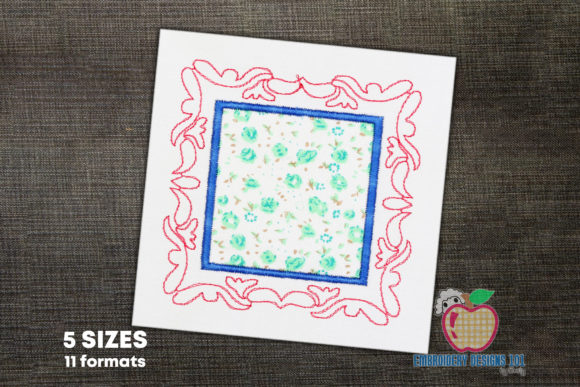
Decorative Square Applique Frame
First Impression: Clean, Versatile, and Instantly Recognizable
As an embroidery designer who’s prepped over 200 craft fair booths—and shipped thousands of embroidered tote bags, tea towels, and patches—I opened Decorative Square Applique Frame expecting a simple border. What I got was smarter: a balanced, scalable frame that reads as both modern and timeless. It doesn’t shout “farmhouse” or “festive”—it whispers “handmade quality.” That quiet confidence is gold at a crowded market. Customers pause longer for designs that feel intentional, not trendy. This one lands as decorative without being fussy, structured without feeling rigid—ideal for makers who want elegance without extra complexity.
Where It Shines on Craft Fair Products
On a booth table full of embroidered goods, Decorative Square Applique Frame stands out most when used intentionally—not as filler, but as framing. Here’s where it delivers:
- Tote bag design: Centered on the front panel (6x10 hoop size), it turns a plain canvas tote into a giftable, boutique-ready item—especially with contrasting thread colors.
- Apron embroidery: Placed just above the pocket (4x4 or 5x7 size), it adds polish without overwhelming the garment’s utility.
- Tea towel embroidery: At 7in square on a linen-cotton blend, it anchors the design space beautifully—no floating motifs, no awkward gaps.
- Embroidered patch: The 4in version works flawlessly as a sew-on or iron-on patch for denim jackets, kids’ backpacks, or market bags.
- Pillow cover & small pouch: Its symmetrical geometry ensures crisp alignment even on curved seams or bias-cut edges—critical for professional-looking finished products.
It’s less effective on curved cap surfaces or dense knit caps—those demand simpler, lower-stitch-count motifs. And while it *can* go on dark fabric, test contrast first: light thread on black linen needs tighter stitch density to avoid “ghosting.”
Production Realities: Speed, Scale, and Consistency
This is where Decorative Square Applique Frame earns its place in your digital embroidery file library. With five sizes—from 4in to 8in—it scales cleanly across hoop sizes (4x4, 5x7, 6x10, 8x8, 8x12). No distortion. No pixelation. That means you can batch-produce matching sets: three tea towels at 5x7, two pillow covers at 8x8, and six patches at 4x4—all from one machine embroidery design. For Etsy sellers and small shop owners, that’s time saved, consistency locked in, and mockup variety built-in.
Photography is effortless too. The clean lines and open center make printable mockups pop—no busy background needed. On Instagram or Etsy listings, it reads clearly even as a thumbnail. And because it’s categorized under Backgrounds, it plays well with layered designs: add a monogram, seasonal icon, or custom phrase inside the frame later—without re-hooping.
Careful-Use Notes Every Designer Should Check
Don’t skip these—even experienced stitchers get tripped up:
- Dense stitch areas: Review the corners and inner border. High stitch density + thick stabilizer = stiffness on lightweight fabrics like chambray or gauzy cotton. Use tear-away + light cut-away combo for balance.
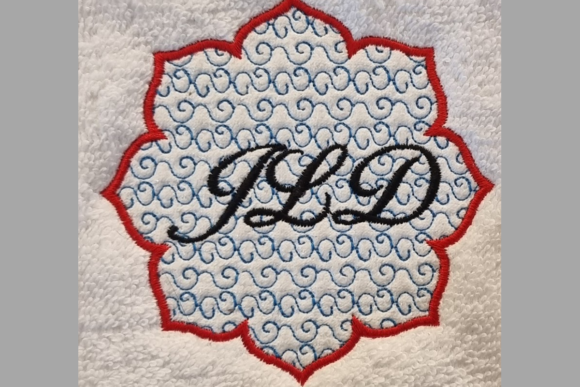
- Fabric texture matters: On highly textured tea towels or terry cloth, reduce top tension slightly and test stitch length—dense satin stitches can sink or blur.
- Small sizes need scrutiny: At 4in, fine interior details may soften. If your target customer loves “tiny perfect things,” verify clarity on scrap before committing to 50 patches.
- Dark fabric + light thread: Increases risk of stabilizer show-through. Test with a mid-weight fusible + topping (like Sulky Solvy) for crispness.
- Commercial embroidery use: Confirm licensing terms before selling finished products—this is a digital embroidery file intended for physical resale, but always double-check scope.
How It Elevates Your Booth & Brand
A craft fair isn’t just about what you sell—it’s about what people remember. Decorative Square Applique Frame strengthens your visual identity by offering cohesion across product types. A customer who loves your embroidered apron might also buy a matching pillow cover—because the frame ties them together. That’s brand consistency without repeating the same motif.
In person, it draws attention through rhythm and restraint. Unlike chaotic all-over patterns, this design gives the eye a place to rest—then invites closer inspection of thread sheen, fabric drape, and finishing. That pause? That’s where value perception rises. Buyers don’t just see “embroidery”—they see intention, care, and handmade quality.
For Etsy sellers, that translates to better conversion. Listings with clean, framed embroidery show professionalism. Pair it with a minimalist description (“Hand-embroidered linen tea towel, framed in tonal perle cotton”) and you’ve elevated a $24 item into a curated gift.
Final Designer Checklist Before You Stitch
Before cutting fabric or loading hoops, run through this:
- Test the Decorative Square Applique Frame on scrap fabric matching your final product’s weight and weave.
- Check thread colors against your fabric swatches—not your screen. Monitor lighting: daylight vs. booth LED changes contrast dramatically.
- Review spacing between frame elements. Tight corners should nest cleanly; wide borders shouldn’t look hollow.
- Confirm hoop size matches your machine and design variant—don’t assume 5x7 fits if your design is labeled “6x10 optimized.”
- Inspect stitch density in the product image. Dense fills require stronger stabilizer than openwork.
- Create at least one real mockup—not just a digital preview. Drape it. Hold it. See how light hits the stitches.
- Compare fabric colors side-by-side: ivory thread on oatmeal linen reads warmer than on stone-gray cotton.
- Verify commercial licensing applies to your business model—especially if selling wholesale or via third-party platforms.
When done right, Decorative Square Applique Frame isn’t just another background—it’s your quiet signature. It frames your work, honors your craft, and gives customers a reason to return—not for novelty, but for trust. That’s how handmade products become heirlooms, and craft fairs turn into loyal followings.