Country Rose. Stylized Cross Stitch
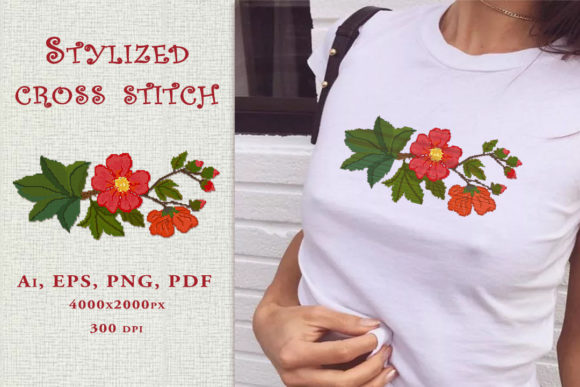
As someone who’s stitched hundreds of designs across apparel, home goods, and boutique gifts—I opened Country Rose. Stylized Cross Stitch expecting charm, but what struck me first was its quiet confidence. It doesn’t shout. It leans in—soft curves, open negative space, and a hand-drawn rhythm that feels intentional, not hurried. This isn’t a busy floral explosion; it’s a single stylized rose, rendered with cross-stitch sensibility but scaled for versatility: think rustic tea towel, linen apron pocket, or the front chest of a baby onesie.
A Real Moment: Embroidering a Linen Tote for a Local Boutique
Last week, I prepped Country Rose. Stylized Cross Stitch for a custom order—a set of 12 linen tote bags for a small-town gift shop specializing in handmade kitchen goods. The client wanted “timeless, not twee”—something that felt heirloom-adjacent but still fresh enough for Instagram. I loaded the SVG into my digitizing software, converted it to a machine embroidery design, and ran a test on scrap linen with medium-weight cutaway stabilizer. What stood out immediately was how gracefully the design translated: clean outlines held up, the petal layering read clearly at 3.5 inches wide, and the open center left room for subtle fill stitch variation without overcrowding.
Where It Shines—and Where It Asks for Thought
Country Rose. Stylized Cross Stitch is strongest when paired with natural textures and relaxed contexts. It works beautifully on:
- Tote bags and tea towels: The scale and spacing breathe on medium-weight cotton and linen—no crowding, no lost detail.
- Baby items and nursery decor: Its gentle shape and lack of sharp angles make it ideal for onesies, burp cloths, and pillow covers where softness matters visually and physically.
- Sweatshirts and lightweight knits: When digitized with balanced stitch density and a light underlay, it anchors without stiffening the fabric.
- Embroidered patches and cap fronts: At 3–4 inches wide, it reads clearly even on curved surfaces—just confirm your hoop size accommodates the width comfortably before stitching.
But—and this is where real-world testing matters—it needs thoughtful placement on certain materials:
- Thin or stretchy fabrics: Like rayon challis or jersey tees? Use tear-away + topping, and reduce fill stitch density slightly to avoid puckering.
- Dark or textured backgrounds: That delicate stem line and fine petal edge can fade on heavy twill or black terry cloth. Test thread colors first—cream or heather gray often reads warmer and clearer than stark white.
- Small hoops (under 4”): The current layout fits cleanly in a 5x7 hoop, but if you’re working with a 4x4, check whether minor cropping of outer leaves affects balance. It’s forgiving—but verify.
- Frequent-wash items: Think kids’ towels or aprons. Reinforce backings with light stabilizer, and avoid overly dense satin stitch in the center—opt for a gentle fill stitch instead.
Why Craft Business Owners Will Appreciate This Design
If you sell on Etsy or run a local craft fair stall, Country Rose. Stylized Cross Stitch quietly lifts perceived value. It doesn’t rely on glitter or novelty—it earns trust through restraint. Customers notice the difference between “cute clipart” and something that feels *designed* for stitch: consistent line weight, intentional gaps between elements, and proportions that honor both botanical reference and cross-stitch tradition.
For digital product sellers, the included AI, EPS10, SVG, PDF, and PNG files (4000x2000 px, 300 dpi, transparent background) mean you can drop it straight into mockups—no clipping masks needed. Use the SVG for scalable web previews; the high-res PNG for print-ready listings; the vector files for resizing without quality loss. Just remember: if you’re bundling it as part of a commercial embroidery file pack or selling finished embroidered goods, confirm licensing terms directly with the creator—this is an Illustrations asset, not an automatically licensed Graphics bundle.
Designer Notes You’ll Actually Use
Before stitching your first client piece—or uploading to your shop—here’s what I do every time with Country Rose. Stylized Cross Stitch:
- Test on scrap fabric—same weight and weave as your final piece. Linen behaves differently than quilting cotton, and sweatshirt fleece hides detail fast.
- Check thread color contrast in natural light. A pale pink thread may vanish on ecru linen unless you add a subtle outline stitch.
- Review stitch density in your digitized version—especially around the rose center. Too dense = stiffness; too sparse = fragility.
- Inspect small details at actual size: are those leaf tips crisp? Does the stem taper naturally? If not, tweak before committing.
- Mock it up in black and white first. If it loses personality without color, reconsider thread palette or layout.
- Compare light vs. dark fabric backgrounds using your PNG file—some details gain presence on charcoal, others recede.
- Use proper stabilizer: medium cutaway for stable wovens, lightweight tear-away + topping for knits.
- Confirm dual-use fit: Does it feel equally appropriate for a personalized gift and a wholesale boutique order? With Country Rose. Stylized Cross Stitch, yes—its tone is warm but never cloying.
Final Thought: It’s Not Just a Rose. It’s a Tone Setter.
In a market saturated with over-digitized florals and generic motifs, Country Rose. Stylized Cross Stitch stands out by honoring simplicity. It doesn’t need embellishment. It doesn’t beg for attention—it earns it, stitch by careful stitch. Whether you’re embroidering a holiday gift for a new parent, building a cohesive line of rustic kitchen goods, or creating digital embroidery files for fellow makers, this design supports intention—not just decoration. It’s the kind of embroidery file that makes customers pause, tilt their head, and say, “That feels like *mine*.” And in craft business, that’s the highest compliment of all.